Themes and career options
There are three core themes at the heart of a crime scene science degree.
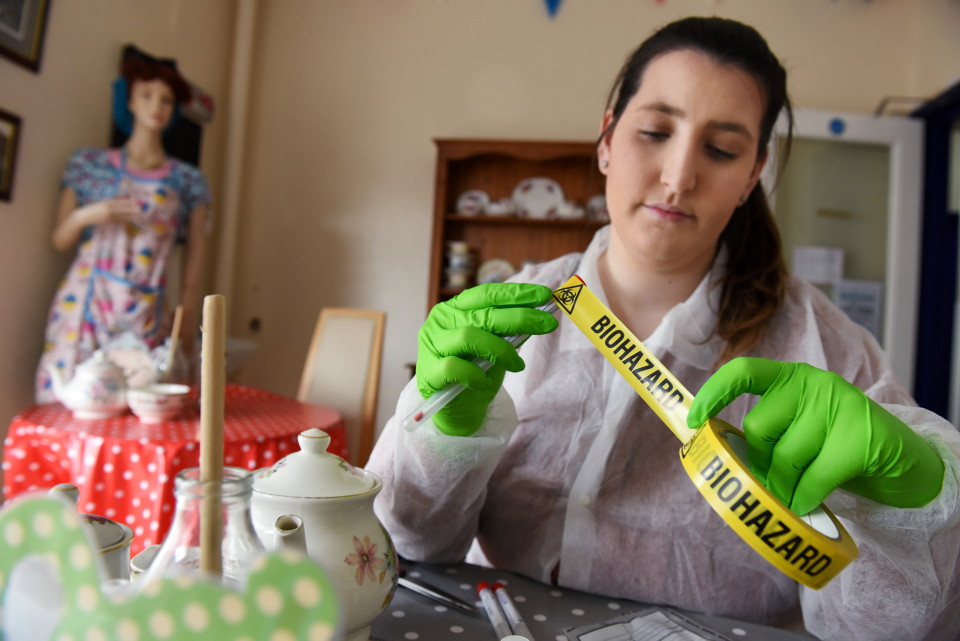
The first focuses on preparing you for a career as a crime scene investigator (CSI). You study a wide range of practical and scientific modules, equipping you with the skills to search, observe, record, enhance and recover forensic evidence – the very foundation of effective crime scene investigation.
The second focuses on core principles of forensic science, such as detailed examination of footwear marks, and the evidential significance of material like glass and fibres. These elements play a crucial role in reconstructing events and linking suspects to crime scenes. One of the most valuable skills for a CSI is the ability to bridge the gap between forensic analysis and the investigative mindset of a detective, translating scientific findings into actionable intelligence.
The third theme focuses on preparing you for a career as a crime intelligence researcher or crime analyst. These roles are incredibly diverse and span across multiple sectors – from business crime analysis and social media intelligence to major crime investigations, counter-terrorism and community safety partnerships. Our graduates have gone on to work in a wide range of organisations, including police forces and government departments.
Digital and practical skills
At Teesside, our crime scene science students complete very few traditional closed-book exams. Instead, assessments are designed to develop real-world digital and practical skills that are directly relevant to modern investigative work.
On the digital side, students create webpages, infographics and link charts – even using AI to explore innovative solutions to community crime problems.
Practical assessments focus on hands-on expertise, from crime scene photography and fingerprint enhancement, to presenting evidence in simulated courtrooms. These experiences not only build confidence but also mirror the challenges and expectations of real investigative and analytical roles.
My own journey
I started out as an applied science and forensic measurement student here at Teesside (course now known as crime scene science). I went on to work in labs, testing everything from animal feed to medicines, and quickly realised that this environment wasn’t right for me. At 21 years old, I successfully secured a role as a Scenes of Crime Officer with Leicestershire Constabulary (CSI). By 22, I was fully trained and attended my first murder scene investigation.
As a CSI, I examined all kinds of crime scenes – from burglaries and serious assaults to murder investigations and on a few occasions, major disasters such as light aircraft crashes. My role often involved recording evidence and using specialist techniques to recover fingerprints, even from those who had died. The work of a CSI is incredibly varied and often more challenging than people can imagine. But it also offers a powerful opportunity to make a real difference – to help victims of crime and contribute to justice.
Before leaving the police, I progressed to an Assistant Senior CSI role and later became a National CSI Instructor Team Leader, specialising in fire investigation. It eventually led me back to Teesside, this time as an academic.
By Mark Butler