
Across the UK, adults with learning disabilities face significant health inequalities. According to the latest LeDeR report, the average life expectancy for this group is 19.5 years lower than the general population. Many of these deaths are avoidable, often linked to poor access to healthcare, lack of tailored support, and systemic barriers.
In this blog, we’ve teamed up with Camphill Village Trust to share insight into collaborative projects between the Charity and Teesside University, which aim to help address persistent barriers to health and wellbeing for adults with learning disabilities.

Our joint initiatives are featured as a case study in Camphill Village Trust’s newly launched Environmental, Social and Governance (ESG) statement, which includes video interviews with Teesside University dietetics students Jenna Carden-Smith and Megan Walpole, as well as clinical academic Steph Smith.
In these case studies, Jenna, Megan and Steph reflect on their experiences of co-production, inclusive communication, and preventative care within community settings – and the projects’ wider implications.
Co-researching accessible health interventions
At the heart of our partnership with Camphill Village Trust is the modernisation of the LEAN (Lifestyle, Energy, Activity and Nutrition) programme. This is a co-produced project that brings together researchers, healthcare professionals from Tees, Esk & Wear Valley NHS Foundation Trust, and people with lived experience, to update the programme, drawing on the experience and insights of the people it is designed to assist to ensure accessibility and increase efficacy.
Simon Milner, who lives at Botton Village – a Camphill Village Trust community – is a co-researcher on the project. Simon visits Teesside University regularly to contribute to the modernisation of the previous iteration of the LEAN programme.
Discussing his experience of the project, Simon said: “It’s very important to me because I can learn as well as help other people know what sort of nutrition is important. It will then go and help other people who will look at the LEAN project and see it is amazing work these people have put together, and they can follow the booklet and PowerPoint as a guide.”
- Watch an interview with Simon about his work on the LEAN programme.
Speaking about the project, clinical academic Steph Smith explained, “There is a real need to improve the eating environment and the systems level support for people with learning disabilities and mental health conditions. So, actually being able to work with communities such as Camphill Village Trust helps us implement those changes at a more population-based level, rather than waiting until someone gets sick and then giving that support. There’s a real need to move dietetic intervention more upstream”
- Watch an interview with Steph about the LEAN programme.
Powerful placements
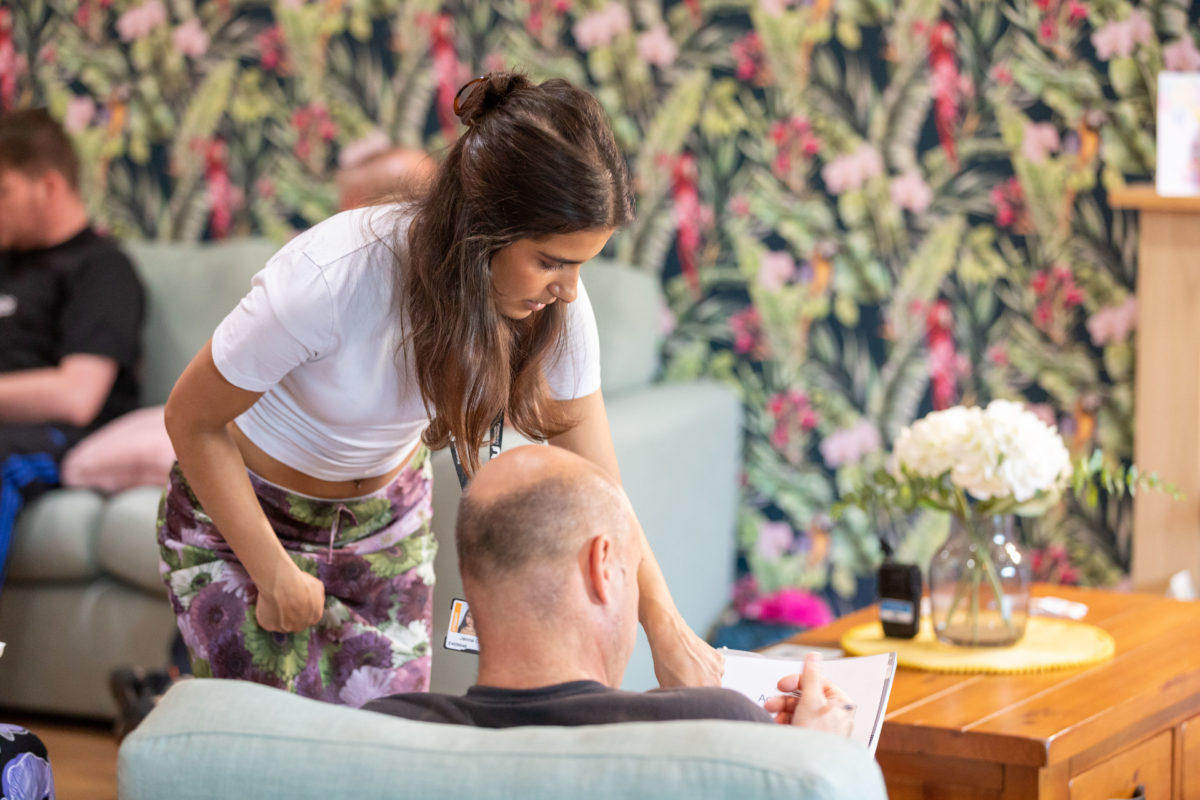
Beyond the LEAN programme, dietetics students from Teesside University have been working within Camphill Village Trust’s Larchfield and Botton Village communities, engaging directly with residents to co-design health resources and develop their understanding the role of person-centred communication in effective care.
Students Jenna Carden-Smith and Megan Walpole were on placement in the Larchfield Community this summer and shared their learning and experiences as part of the Trust’s ‘ESG in Action’ initiative.
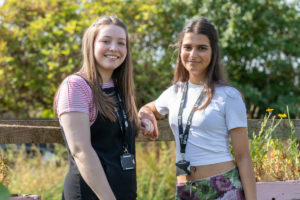
Discussing the lessons they would take away from their time at the Trust, Megan shared, “You go from uni, where it’s quite jargon based and you use quite a lot of technical terms for different things, but here there’s a lot of diverse needs, and the types of communication can be quite specific to each person”.
For Jenna, meanwhile, the key takeaways are all about person-centred care: “I think especially when it comes from a good place, it can be quite easy to just make assumptions and make decisions on behalf people with learning disabilities. But, when we’ve been here and we’ve been talking to people and getting to know what they think about different situations and their ideas, their contributions can be really valuable”.
These experiences offer a powerful two-way benefit: Camphill Village Trust community members gain access to preventative healthcare and practical lifestyle education, while students develop the skills and insight they’ll carry into their careers, and the wider healthcare sector.
Steph Smith has supervised many of these placements and had witnessed how impactful they can be for both students and future healthcare services: “Working within an organisation that has such varying communication needs and preferences is so, so important for our students. To then take that into the workforce – if you can communicate with different groups of people – that’s such an important skill”.
Why It Matters
The LEAN programme and wider partnership between Teesside University, Camphill Village Trust, and TEWV NHS Foundation Trust demonstrate the power of co-production in tackling entrenched health inequalities. By working with people with lived experience and embedding students in community-led initiatives, we’re not only improving access to preventative care for adults with learning disabilities, we’re also shaping a new generation of healthcare professionals who understand the value of inclusive, person-centred practice.
This work is also a powerful reflection of how collaboration between academic institutions, communities, charities and NHS services can create change.
We’re grateful to all who have taken part in these projects, and we hope to continue our collective work to tackle health inequalities, by placing people with learning disabilities at the heart of research and health interventions.