Joining the EPSRC Peer Review College – My New Role

I am pleased to share that I have joined the Engineering and Physical Sciences Research Council (EPSRC) Peer Review College.
Think of the college as a brain trust of more than 6,000 experts who help make sure the UK’s research funding goes to the most promising, high-quality projects. We are talking everything from pioneering engineering solutions to cutting-edge physical sciences, ICT, and more. Our job? Review funding proposals, give honest and informed feedback, and sometimes sit on panels where the future of these projects is decided.
Why did I join? Well, I am a big believer in giving back to the research community, and this role is a perfect blend of service and learning. As a reviewer, I will get a sneak peek at groundbreaking ideas before they hit the headlines. I will also pick up valuable insights into what makes a funding application stand out, lessons I can carry into my own work and share with colleagues.
EPSRC works hard to make the college as diverse as the research community it serves in expertise, career stage, background, and location. That mix means every review benefits from a rich variety of perspectives.
If you have ever been curious about how funding decisions are made, or you want to shape the future of UK science and engineering, I would recommend looking into joining. The application process is open year-round. You can find out more on the EPSRC Peer Review College website.
For now, I am just looking forward to rolling up my sleeves, diving into fascinating proposals, and playing my part in helping the UK’s brightest ideas get the support they deserve.
Here is the List of Current EPSRC Full College Members as of March 2025.
Presenting at AIED 2025 in Palermo – A Memorable Experience

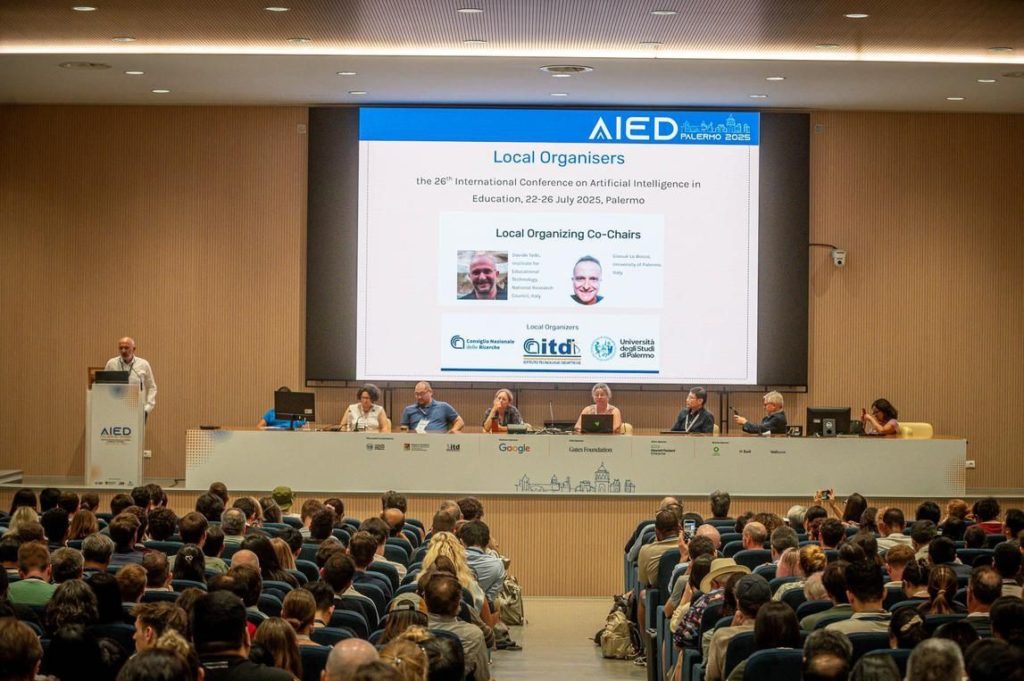
I had almost forgotten how intense 32°C (90°F) can feel until I stepped into the bright sunshine of Palermo, Sicily,  this summer. The warmth was a fitting backdrop for what turned out to be an equally energising academic experience: the 26th International Conference on Artificial Intelligence in Education (AIED July 22-26, 2025).
A Highly Competitive Acceptance
This year, I had the privilege of presenting my paper, “Distinguishing AI-Generated and Human-Written Text Through Psycholinguistic Analysis.” The paper was accepted through a highly selective process; just 19% of 800 submissions from 63 countries made it into the programme.
My research introduces an interpretable, stylometry-based method for detecting AI-generated text, grounded in cognitive and psycholinguistic theory. The approach focuses on how language reflects underlying thought processes, making detection not just accurate, but explainable.


Engaging Discussions and Valuable Feedback
One of the highlights of the conference was the feedback from fellow researchers. In particular, I’m grateful to Lukas Erle for his insightful recommendations, which will help shape the next phase of my work. The questions and discussions following my presentation reinforced the growing importance of transparency and interpretability in AI detection methods.
Grateful for the Support
My attendance at AIED 2025 was made possible by a scholarship award, supported by a recommendation from Annalisa Occhipinti, whose encouragement and advocacy I truly appreciate.
I also extend my thanks to the fantastic organising committee — Olga C. Santos, Seiji Isotani, Alexandra Cristea, Davide Taibi, Giosuè Lo Bosco, Domenico Amato and many others for delivering such a smooth, engaging, and inspiring event.
Building Connections
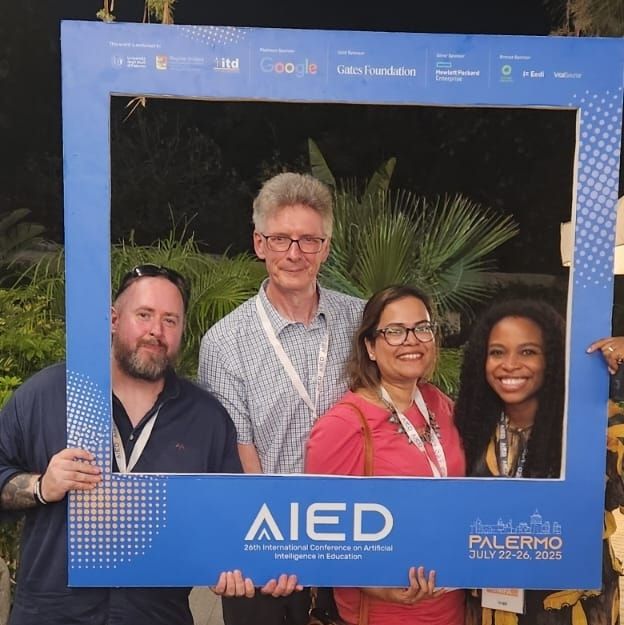
Conferences are as much about the people as they are about the papers. It was wonderful to connect with researchers from around the world, including Luis Medina-Gual, Diego Degetau, Jacob Puthipiroj, Nurun Nahar, Nishat Tasnim Raha, Juliana Barros, and Javad Roshhanfekr.
Looking Ahead
The conference reaffirmed the value of collaborative, interdisciplinary research in addressing the challenges posed by generative AI. I return inspired not just by the technical advances presented, but by the sense of global community committed to shaping AI in education for the better.
You can read the paper here: Distinguishing AI-Generated and Human-Written Text Through Psycholinguistic Analysis.
Some Photos to wrap up




Presenting at AIED 2024 in Recife, Brazil
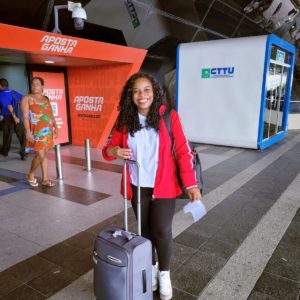
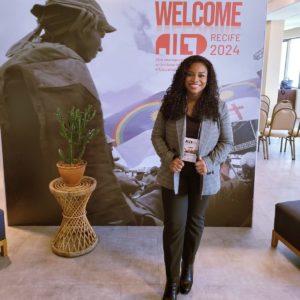
Nominated for Best Late Breaking Paper at the 25th International Conference on Artificial Intelligence in Education (AIED July 8 – 12, 2024) in Recife, Brazil, I am thrilled to share that I had the incredible opportunity to present my paper, “StyloAI: Distinguishing AI-Generated Content with Stylometric Analysis.”
This paper addresses the influx of AI-generated text in the education domain, where students could submit AI-generated ICAs without proper attribution of authorship. It explores methods to differentiate between AI-generated and human-written texts in educational settings.
I am excited to continue this journey and explore new frontiers in AI and data analysis in education 😊 !
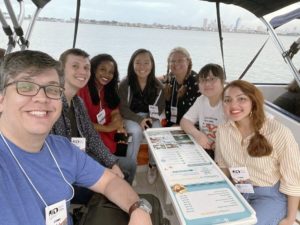
I would like to thank the organizers of the AIED 2024 conference (Rafael Ferreira Mello and Taciana Pontual Falcão) for hosting an intellectually stimulating and enjoyable event. I loved the new connections I made, the catamaran trip, the FEIJOADA and the walks on the beautiful sandy beaches of Recife.
A special shout out to Teesside University and my research group leads for providing an enabling environment for interdisciplinary research and the financial support that made my participation in this conference possible.
hashtag#AIED2024 hashtag#TeessideUniversity hashtag#AIinEducation hashtag#DataAnalysis
Some Photos to wrap up


Attending ‘How to Make a Difference in Policy’
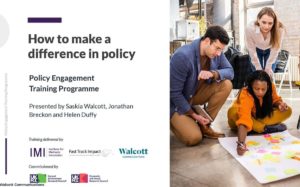
I attended the “How to Make a Difference in Policy” training at Bath Spa University on 17th September, 2024, which provided an insightful and practical approach to policy engagement.
Thanks to the NERC: Natural Environment Research Council – ESRC: Economic and Social Research Council for covering the travel costs to the training session.
The session, led by Saskia Walcott and Helen Duffy, delved into the critical aspects of drafting effective policy briefs, identifying key components such as the importance of clarity, evidence synthesis, and targeting specific policy issues.
One key takeaway was how to communicate complex ideas in simple, concise language while ensuring the content remains relevant and actionable for policymakers. Additionally, the training emphasized the importance of design and visuals to enhance the readability and impact of policy briefs.

hashtag#PolicyEngagement hashtag#PolicyBrief hashtag#ResearchToPolicy hashtag#ProfessionalDevelopment #TeessideTeesside University