
I’m Dr. Chidimma (Chi) Opara
I am a Lecturer in Computer Science at the School of Computing, Engineering & Digital Technologies, Teesside University, Middlesbrough, UK. You can also find my research profile here.
My academic journey has taken me from a BSc in Computer Science (Federal University of Technology, Owerri, Nigeria), to an MSc in Network and Information Security (Kingston University, London), and finally to a PhD in Computing Science here at Teesside.
My love for technology goes way back to childhood, when I would sit beside our family’s old desktop, the kind that groaned and whirred for minutes before coming to life. I was fascinated by its possibilities, but I also saw the risks: pop-ups, scams, and the hidden dangers of the online world. Those early experiences planted the seed for what would become my lifelong passion: making technology not only more innovative, but also safer and more inclusive.
That passion brought me to the UK to deepen my expertise in cybersecurity and artificial intelligence. Today, I bring that knowledge into my teaching, research, and mentorship, helping students build confidence and thrive in the tech world.
Outside work, you’ll probably find me in a Zumba class at the Teesside University gym, where I recharge and have fun.
Research Interests
My PhD research, titled “Detection and Analysis of Phishing Attacks on Web Pages and Virtual Transactions”, was funded by the Petroleum Technology Development Fund (PTDF) and focused on addressing the persistent and evolving threat of phishing in digital ecosystems. This work led to the development of multiple novel detection frameworks:
- HTMLPhish – A convolutional neural network (CNN) model that operates directly on raw HTML content, achieving an accuracy of 97.5%.
- WebPhish – An end-to-end ensemble model combining URL and HTML features, which enhanced detection capabilities with 98.8% accuracy.
- Ethereum Link Prediction Framework – This system analysed 12 network features to predict malicious activity in blockchain transactions using LightGBM (with 89% recall and 93% AUC), revealing that graph-based metrics like PageRank and betweenness centrality were highly predictive.
Building on this foundation, my current research explores the intersection of machine learning, data analytics, and cybersecurity within broader interdisciplinary contexts. I have been particularly focused on stylometry, the statistical analysis of literary style to distinguish between human and AI-generated text. This involves applying machine learning techniques to uncover subtle linguistic patterns, an area of increasing importance in the age of large language models (LLMs) and generative AI.
As an extension of my work on phishing, I am now investigating how generative AI can be misused to craft more deceptive attacks and how stylometric and psycholinguistic features can be leveraged for better detection. My research interests also extend to the application of machine learning in social sciences and health, particularly in areas such as misinformation, identity verification, and behavioural analytics.
PhD Opportunities & Collaborations
I’m keen to supervise PhD students and partner with researchers, industry, and the public sector on projects who are working at the intersection of machine learning, cybersecurity, stylometry, and generative AI. Specifically in:
- Novel approaches to phishing detection and prevention
- Large language model (LLM) security and explainability
- The socio-technical implications of AI in digital communication
- The application of data analytics in public policy, healthcare, or behavioural science
If your research interests align with mine or you would like to explore potential collaborations, feel free to get in touch.
Publications
- Opara, B. Wei, and Y. Chen (2020). “HTMLPhish: Enabling Phishing Web Page Detection by Applying Deep Learning Techniques on HTML Analysis.” 26th International Joint Conference on Neural Networks (IJCNN) https://doi.org/10.1109/IJCNN48605.2020.9207707. Access the paper.
- Opara, Y. Chen, and B. Wei (2023). “It’s All Connected: Detecting Phishing Transaction Records on Ethereum Using Link Prediction.” International Conference on Hybrid Intelligent Systems, https://doi.org/10.1007/978-3-031-27409-1_107. Access the paper.
- Opara, Y. Chen, and B. Wei (2024). “Look before you leap: Detecting phishing web pages by exploiting raw URL and HTML characteristics.” Expert Systems with Applications. https://doi.org/10.1016/j.eswa.2023.121183. Access the paper.
- Opara (2024). “StyloAI: Distinguishing AI-Generated Content with Stylometric Analysis.” 25th International Conference on Artificial Intelligence in Education (AIED 2024). Nominated for Best Late Breaking Paper. https://doi.org/10.1007/978-3-031-64312-5_13. Access the paper.
- Paolo Modesti, Lewis Golightly, Louis Holmes, Chidimma Opara, Marco Moscini (2024). “Bridging the Gap: A Survey and Classification of Research-Informed Ethical Hacking Tools.” Journal of Cybersecurity and Privacy. https://doi.org/10.3390/jcp4030021. Access the paper.
- Opara, P. Modesti, and L. Golightly (2025). “Evaluating Spam Filters and Stylometric Detection of AI-Generated Phishing Emails.” Expert Systems with Applications. https://doi.org/10.1016/j.eswa.2025.127044. Access the paper.
- Emmanuel Ofiebor, Chidimma Opara (2026). “Evaluating Generative AI in Postgraduate Assessment Through Writing Quality, Accuracy and Pedagogical Implications.” Future Facing Learning Conference. Access the paper.
Teaching
I am passionate about fostering inclusive and high-impact learning experiences. My teaching practice is informed by research and grounded in empathy, with a commitment to student retention, success, and employability. Module Leadership & Teaching:
- Module Leader: Ethics and Governance, System Management & Information Governance, IT Ethics & Law
- Module Instructor: Big Data & Business Intelligence, Project Management, Information Systems, System Design & Databases, Managing Projects with PRINCE2 and Hacking the Human.
- Module Validator: Cybersecurity MSc Modules, including ‘Hacking the Human’ in collaboration with MDIS Singapore.
Academic Leadership:
- Lead or Co-lead on funded research proposals
- Director of Studies for PhD students
- Supervisor of over 20 Master’s dissertations
- Personal tutor to 50+ undergraduate and postgraduate students
Funding and Awards
Receiving a doctoral scholarship from the Petroleum Technology Development Fund (PTDF) was a life-changing milestone. It enabled me to complete my PhD, conduct impactful research, present at international conferences, and collaborate across borders.
Since then, I have continued to lead and contribute to funded research projects, gaining valuable experience as a Principal Investigator and collaborator on multi-institutional bids.
Selected Honours & Awards:
- 🏆 1st Prize, Oral Presentation, Research Week 2018, Teesside University
- 🥇 1st Prize, 3-Minute Thesis (3MT), Teesside Research Week 2021
- 🥈 2nd Prize, 3MT Regional Competition 2022
- 🌟 Nominated for Teesside University Star Awards for Outstanding Teaching (2024 & 2025)
- 💼 PTDF Doctoral Scholarship (£116,000)
- 🧠 PI, CyberASAP (2025), Innovate UK (£92,000)
- 📊 PI, UKRI Data Sandpit for Metascience (2024)
- ✈️ Travel Grant for AIED 2025 Conference, Palermo, Italy (£1,200)
- 🏅 Nominated for Best Late-Breaking Paper, AIED 2024
- EPSRC Peer Review College Member
Outreach and Public Engagement
Reviewer Roles: Served as a reviewer for several journals and conferences, including Expert Systems with Applications, IJCNN, IEEE Access, Automatika, Computers in Industry and AIED.
Presentations and Workshops:
- Presented at national and international platforms such as IJCNN, AIED and the International Conference on Hybrid Intelligent Systems.
- Led workshops including UCAS Teesside – Cyber Forensics and Women in STEM, promoting inclusivity and STEM engagement.
- Mentored in Kingston University’s Beyond Barriers Mentoring Scheme, where I supported students from traditionally underrepresented backgrounds providing one-on-one career and academic mentoring, helping mentees build confidence, identify skill gaps, and develop future plans.
- Delivered a guest lecture titled Sentiment Analysis Using RNNs during the Summer Internship Program 2025, organized by the Department of Computer Science & Engineering at Stanley College of Engineering and Technology for Women in Hyderabad, India. The hands-on session trained undergraduate students on the practical application of Recurrent Neural Networks for sentiment classification, enhancing their machine learning skills.
- Presented my research, Distinguishing AI-Generated and Human-Written Text, at the Early Career Researcher Showcase to an audience of academics and postgraduate researchers. My talk highlighted the integration of stylometry and psycholinguistic theory to address the growing concern of AI-written content in academic contexts.
- International Women’s Day as part of our PhD Spotlight Sessions!
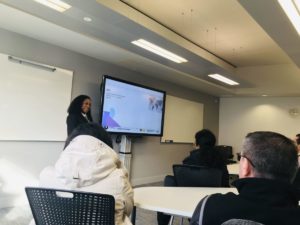
- Women In STEM@SCEDT – Research Talks
Contact
For supervision, collaboration, or outreach, use the form below: