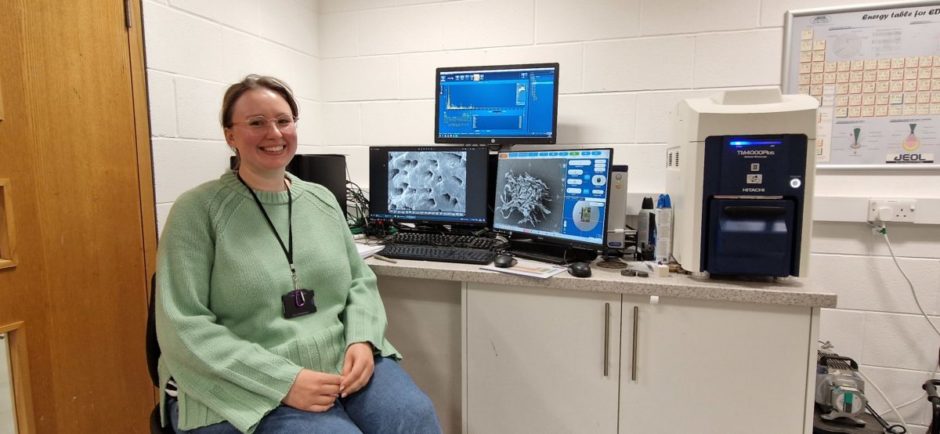
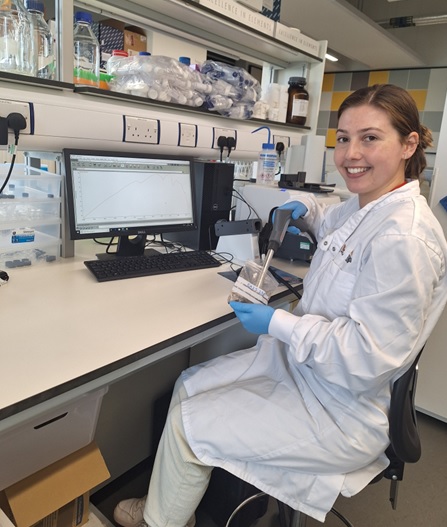
In April 2025 Beth Hinnigan joined the laboratory for a 5-month internship as part of the Teesside University graduate internship scheme to work as a soil scientist. As an Environmental Science graduate this opportunity will help her to gain valuable laboratory work experience to add to her CV such as using pXRF and NIR analysis of soil samples.
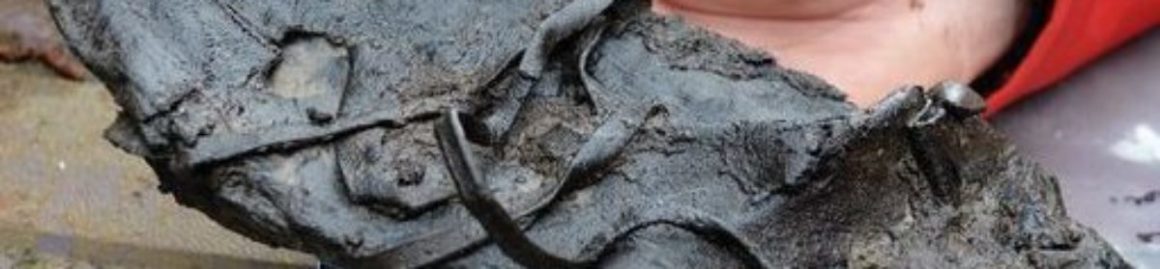
“My responsibilities involve preparing, testing and analysing the results from all the soil samples that I receive from a Roman Archaeological excavation site called Magna at Vindolanda near Hadrians wall in Northumberland. All the fresh soil samples that arrive needs to be dried in an oven to remove the water content and then ground in a mortar and pestle to create a fine powder. This step of soil preparation is essential for the machines to produce accurate data. The samples are then tested using a pXRF machine which uses X-rays to identify the elemental composition of the samples and NIR machine to show the wavelength of each element. I can then analyse this data to calculate the percentage of each element that makes up each sample. Finally, I produce a map showing any hotspots at the site where elements are concentrated and this could help identify how different areas of the land were used.
During this internship I have learnt about new analytical techniques and taken responsibility managing samples and data. It has been a great experience to collaborate with other staff and play an active role in this ongoing project”.