
Infectious disease in wildlife

Our very own Jamie Bojko was in the limelight again with this Teesside University press release that was relayed in the local press (Teesside biologist explores infectious diseases
Northern Echo, p.45 and online, 12/06/2020
). Originally published online by Teesside University’s Media Centre

“Dr Jamie Bojko, a Biology Lecturer in the University’s School of Health & Life Sciences, says that understanding disease diversity and emergence in wildlife systems is vital to determine how emerging diseases arise and how they might evolve.

Together with colleagues at the University of Florida (UF) and Fish and Wildlife Commission (FWC), the research team have recently identified a new genetic lineage of parasite, known as a microsporidian, from crustacean hosts.

Jamie said: ‘This parasite infects the muscle of four crayfish species local to Florida and eats away their tissues, leaving a husk of parasitic spores.

‘The parasite uses a straw-like tube to inject a gooey-centre into a crayfish muscle cell. This then develops into multiple clone parasites, which form spores to survive in the environment and move on to infect new hosts, completing the cycle.’

Dr Jamie Bojko is working with Dr Donald Behringer, Dr Lindsey Reisinger and PhD student Cheyenne Stratton, all from the University of Florida, along with Paul Moler, from the FWC. The Research team recently published a paper in the Journal of Invertebrate Pathology which highlights the findings of this brand new lineage of parasite, which is reducing the health of crayfish populations.

The group are now looking to examine what effect this disease has on crayfish and how any changes might result in alterations to the local ecology. To do this, the researchers are examining how the disease might change its host’s behaviour, how it might be contracted, and what risk it poses to other invertebrates.

The team have now received further funding from the Wisconsin Department of Natural Resources, to explore this parasite group, in addition to further parasites, to determine whether this disease is able to infect other hosts.

Jamie says that exploring different ecologies for new diseases is hugely important to understand both presence and risk, not only to local species but, additionally, how diseases can change the environment.

Jamie added: ‘There are not many people in the world who research aquatic wildlife disease so to be involved in something like this from the beginning – looking at how a brand-new disease evolves underwater – is incredibly exciting.

‘It is great for me as a biologist, but also great for Teesside University to be working with partners in Florida on such an important piece of research.’

One of the key elements of the new research will be trying to find out if any of the parasites they have discovered are a risk to local species.

‘Many of the crayfish we are working with are invasive species, and can often introduce new parasites to different locations. These parasites may be able to infect native species and cause a wildlife epidemic,’ said Jamie.

‘If we can understand how these new parasites transmit and what else they can infect, we can then start to learn more about the disease and how it might spread and evolve.

‘This brand-new parasite, which we have named Cambaraspora floridanus (after the hosts and location), has little known about it and there is a lot to do. As with any new disease, it is vitally important to understand how it fits into the ecosystem and whether it might cause any irreversible changes to the ecology and crayfish population.

‘We have explored the pathology caused by the parasite and now want to determine whether it has a wider impact on the ecosystem. If it is able to infect multiple species of crayfish then it may be able to infect other invertebrates and maybe even fish, resulting in an impact on the wider freshwater community.’ “
“Seeing Red” contribution to Athena Swan stories

The Ecology and Environment Research Collective contributed to Athena Swan stories on Teesside University’s website with a piece called “Seeing Red”. We described efforts to make field work in the natural environment more inclusive to our community of researchers and students.

The article is reproduce here:

“Field trips are an essential practical and experiential part of teaching, learning and researching the natural environment for degrees and research programmes across biology and geography.

“However, there are many barriers to bringing people into the field and some of these barriers can be particularly discriminatory towards women. To address these barriers and facilitate access to field experiences for women, a team in the School of Health and Life Sciences has been developing measures aimed at greater inclusivity, some of which are specific to women. A key part of this strategy is the development of workflow authorisation for field trips which features a checklist of inclusivity measures.

“When planning taught sessions in the natural environment we try as much as possible to keep the similar time slot as used for classroom teaching and attempt to blend as much as possible a mixture of short field trips and residential trips. This enables learners with caring responsibilities to participate in field trips.

“Increasingly, a high proportion of learners express difficulties of a psychological nature, such as anxiety, prior to taking part to group activities in an un-familiar environment. We have seen this from our experience but it has also been evidenced in national studies which shows that young women are three times more likely to suffer some form of mental health than young men. To help those who are anxious about group activity in an un-familiar environment, we have integrated field preparation sessions into the programme and are currently developing a Minecraft tool to give students an opportunity to familiarise themselves with field work techniques before stepping outdoors. To enable students to build up field skills gradually we start field work in a familiar destination such as the university campus.

“From our experience, we found that some of the anxiety surrounding field trips came about as a result of concerns in relation to availability of toilet/hygiene facilities during field trips. In response to this, staff in the School of Health and Life Sciences have adopted an innovative approach to this. Our new student field guides now identify and signpost, in advance, all opportunities for toilet / hygiene facilities during visits. Typically we plan at least two stops (with plenty of time) into each trip. In addition, the guides highlight the ‘period pack’ carried along with all field equipment, making sure that students who have periods during a field trip are able to access toiletries if required, hopefully reducing anxiety.
Period and Menstrual Hygiene Equality Guide
Toilet stops in the field: An educational primer and recommended best practices for field-based teaching

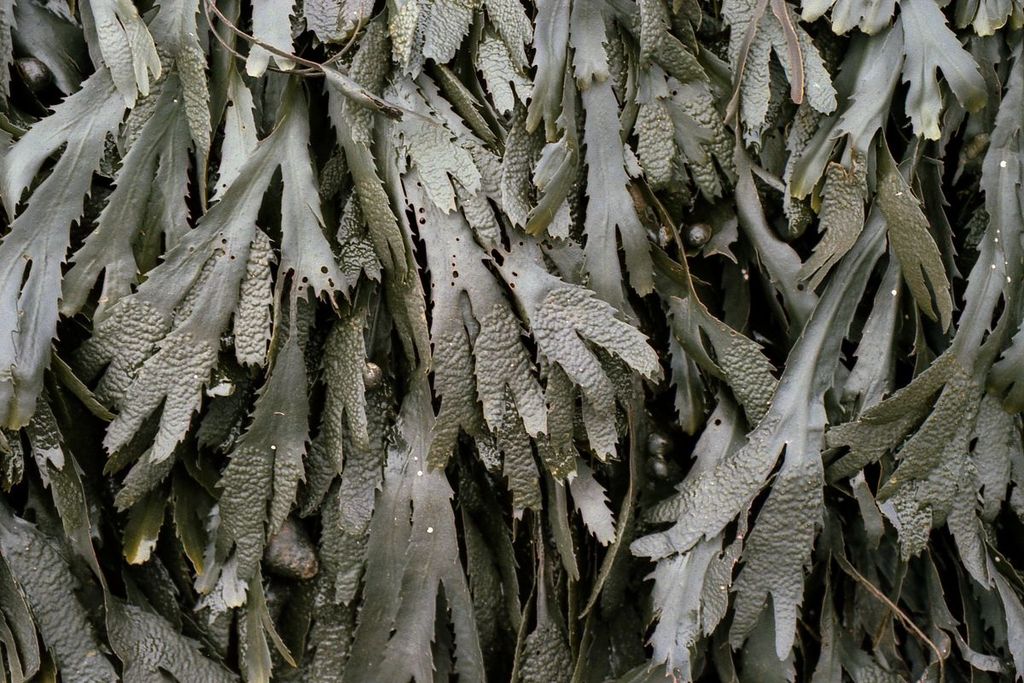
New Output: Zinc release from seaweed (Fucus serratus) as soil amendment

D. A. Oluwadare, H. E. Carney, M. H. Sarker, C. J. Ennis, 2020. Kinetics of water-extractable zinc release from seaweed (Fucus serratus) as soil amendment. Journal of Plant Nutrition and Soil Science. 183, 136–143. DOI: 10.1002/jpln.201900398

First published: 07 February 2020

Abstract:

Soil fertilization with trace-metal rich organic fertilizers such as Fucus serratus seaweed may be an effective way to combat micronutrient deficiency. In this study the kinetics of zinc release from Fucus serratus seaweed was investigated in a packed soil column leaching experiment over 1,776 h. The release of zinc from control (soil only) and treatment (soil + seaweed; equivalent zinc application rate of 1.42 kg ha−1) columns, measured by ICP-MS, demonstrated two distinct release stages. The cumulative zinc release data for each phase were fitted to five kinetic models: zero order, first order, Elovich, power function and parabolic diffusion. In the first stage (0–400 hours) the release of zinc from both control and treatment was best described by a parabolic rate law, indicating release of zinc from a soluble soil reservoir. In the second stage (400–1,776 h) zinc release followed a zero order rate law indicative of slow release from an essentially insoluble reservoir. The modelled difference between the amount of zinc released from treatment and control columns in stage 1 (230 ± 11 µg) represented the total amount of zinc added via seaweed. The parabolic rate constant for seaweed zinc release was 12.09 µg g−1 h−0.5. In summary, the addition of F. serratus to soil is a viable source of labile zinc and a low cost agronomic option for mitigating zinc deficiency in soils.