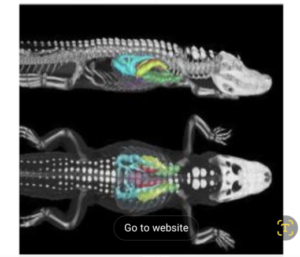
Crocodylus acutus have been known for their very low metabolic rate, enabling them to survive long periods of time with little or no food.
They are ectothermic and the environmental temperature effects their metabolism. At warm temperatures, their metabolic rate increases, allowing activity, growth and digestion. In cooler temperatures, their metabolism slows extremely. Therefore, Crocodylus actus uses energy significantly efficiently and can survive weeks and even months without food especially large adults.
Crocodylus acutus is opportunistic carnivores, eating fish, birds, mammals, and sometimes carrion. They do not chew food; they tear prey into chunks or swallow it whole. Firstly, the stomach produces extremely strong acids, capable of dissolving bones, shells, and tough tissues. Secondly, gastroliths (swallowed stones) help mechanically grind food and might aid buoyancy. Finally, nutrients are absorbed slowly and efficiently, supporting long fasting periods.
After a large meal, Crocodylus acutus often remains inactive to save energy while digesting. This combination of slow metabolism, powerful digestion, and energy efficiency makes Crocodylus acutus highly successful predators in nutrient limited environments. (Briggs-Gonzalez et al., 2021)
Crocodylus acutus uses oxygen more effectively in high oxygen demand by unidirectional respiratory system like, when they stay under the water.
Turn back the clock to the Triassic Period and the first crocodilians were far from the present, Inactive and heavy footed. The fossils suggest that they were fast-growing and active spices. How and when they were changed to take advantage of slow things down. Researchers believe that this happened with the movement into water, with the adoption of a semi-aquatic, lurking habits and their growth slowed down. Secondly, the fossil of first Crocodylus-like family dating 220 million years ago seems to wipe out the aquatic lifestyle theory. “Despite, being the earliest known Crocodylus relative to show a slowed growth rate, this new animal lived way before Crocodylus started exploring the water”. Davis, J. (2023). However, why these land-living animals evolved a slower metabolism is still resolved. They were living directly alongside the dinosaurs. Dinosaurs were doing something completely different, which was grow fast. But the reason why they adopted to the different strategies is still unknown.
Tracing back the origin of Crocodylomorphs showed that this group of spices first appeared in what would become modern Europe, before the first of Crocodylus and Alligator mississippiensis split somewhere in what is now North America. Furthermore, salt adopted Crocodylus had the ability to spread cross the world and take over the
Africa, Asia and Oceania, while Alligator mississippiensis and their relatives were almost limited to the America. Davis, J. (2023)
Crocodylus acutus to maintain oxygen levels in the bloodstream changes breathing rate by central nervous system and peripheral chemoreceptors. Heat also increases the body temperature and metabolism and requires more oxygen therefore these receptors make the ventilation more efficient by making it more rapid and faster to breath oxygen in. On the other hand, during the rest and diving these receptors temporarily decrease the oxygen levels by decreasing ventilation rate. Caroline C. Tonozzi. (2024)
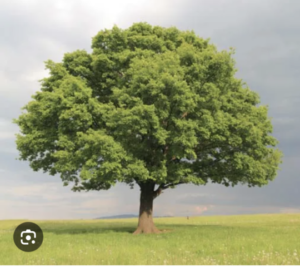
Quercus robur can convert carbon dioxide and water into oxygen, by photosynthesis. In photosynthesis, plants can capture energy from the sun and transform water and carbon dioxide from the ground into oxygen by two steps.
First, chloroplasts capture the light energy of the sun is stored as ATP in the thylakoid membrane of the plan. Secondly, ATP moves to a different part of the plant cell, in the stroma, resulting in creation of glucose that is used by the plant as food, and oxygen as excess energy. We forum, (2022)
Quercus robur are autotrophic plants with a metabolism based on photosynthesis rother than food consumption. Using sunlight, chlorophyll in leaves converts carbon dioxide and water into glucose, releasing oxygen. This glucose is used for respiration, growth, starch storage, and reproduction.
Quercus robur breathes continuously (day and night). Gas exchange takes place mainly in stomata in leaves and lenticles in bark, enabling oxygen uptake and carbon dioxide releases. Metabolic rate in Quercus robur is much slower than in animals and changes with temperature, light availability, water supply, and season. In winter or drought, metabolism slows significantly, saving energy. Aranda, Cadahía and Fernández de Simón, (2021)
Quercus robur, breathes with passive diffusion of gases through tiny pros called stomata on the underside of leaves. RHS (2025)
Back 56 million years ago North America was totally different, at the dawn of the Eocene epoch, the earth was warmer than wetter than it is today. A sea had just closed in the middle of the Great Plains, and the Rocky Mountains had not yet been in their full range. The continental plants and animal’s communities were totally different. The Northeast of America and the North of Mexico was a forest covered 11 percent of the land area. However, that was about to change with the spread of what would become some of the most ecologically important and economically vital woody plants worldwide: the acorn-bearing, wind-pollinated trees now called Quercus. Hipp, A. Paul, S (2020)
Over 56 million years Quercus, evolved from a single undifferentiated population into about 435 species found today on five continents, ranging from Canada to Colombia and from Norway to Borneo. Quercus is basic of the functioning of the forests they make across the Hemisphere. The organisms across the tree of life, from fungi to wasps, birds and mammals, their diversity is encouraged by Quercus. Hipp, A. Paul, S (2020)
The respiration concerns the whole plant. It uses oxygen and release carbon dioxide- which is essential to transform carbon compounds like glucose into energy. The root also breathes carbon. There is atmosphere in the soil in a well-drained environment. The respiration of the aerial part, concerns leaves and stem. Quercus robur respiration is stimulated mainly by cellular energy demand and environmental conditions. It has no central nervous system or chemoreceptors compared to Crocodylus acutus. Respiration increases when plant cells are growing or repair and require more ATP. Also, high temperatures boost oxygen consumption and carbon dioxide production because of the enzymatic activity in mitochondria. Encyclopedia of the Environment (2025)
| Feature | Crocodylus acutus | Quercus robur |
| Type of organism | Heterotrophic animal | Autotrophic plant |
| Metabolism type | Low metabolic rate, ectothermic | Slow metabolic rate, temperature-and light-dependent |
| Energy source | Chemical energy from animal prey | Light energy from sunlight |
| Food acquisition | Hunting and swallowing prey | Photosynthesis (no food ingestion) |
| Digestion | Strong stomach acids dissolve flesh and bone | No digestion; sugars synthesized in leaves |
| Main metabolic process | Cellular respiration of absorbed nutrients | Photosynthesis and cellular respiration |
| Gas exchange | Lungs | Stomata (leaves) and lenticles (bark) |
| Activity level | Intermittent, energy-conserving | Continuous growth and maintenance |
| Fasting/energy storage | Can survive months without food | Stores energy as starch in roots and stems |
| Environmental influence | Strongly affected by temperature | Affected by light, water, co2, and temperature |
Figure 3- Comparison table
References
Aranda, I., Cadahía, E. and Fernández de Simón, B. (2021) ‘Specific leaf metabolic changes that underlie adjustment of osmotic potential in response to drought by four quercus species’, Tree Physiology, 41(5), pp. 728–743 (Accessed 06 Jan 2026)
Andrew, H. Paul, S. etl (2022) How Oak trees Evolved to Rule the Forests of the Northen Hemisphere. Available at; https://www.scientificamerican.com (Accessed 20. Nov.2025) Ashman, K. (2023, Aug). DID YOU KNOW TREES BREETH. https://wwf.org.au (02/12/2025)
Briggs-Gonzalez, V.S. et al. (2021) ‘American crocodiles (Crocodylus acutus) as restoration bioindicators in the florida everglades’, PLoS One, 16(5), pp. E0250510. (Accessed 05. Jan. 2026)
Caroline C. Tonozzi. (2024) The Respiratory System in Animals. Available at: https://msdvetmanual.com (Accessed: 26 Nov 2025)
Davis, J (2023) Unrevealing the surprisingly complex of crocodiles. Available at; https://www.nhm.ac.uk (Accessed 20. Nov. 2025)
Encyclopedia of the Environment (2025) Plant resistance to stress: role of respiration? Available at: https://www.encyclopedie-environment.org (Access 26. Nov. 2025)
MacCartney, Mark, ext. A, D, ext. (2021, Nov). Breathing in Birds and Crocodiles. Available at; https://kid.frontliner.org (02/12/2025)
RHS. (2025). How Plants Breath and Exchange Gases. Available at; https://www.rhs.org.uk (27. Nov.2025)
Weforum.org. (2022, Dec). How trees make oxygen. Available at; https://www.weforum.org (02/12/2025)